Fort Warren, Georges Island And The Lady In Black Legend
Fort Warren on Georges Island is real, documented Civil War history. The Lady in Black who supposedly haunts its corridors is a legend, and the man who popularized it said so himself. This guide keeps the two apart.
Short answer
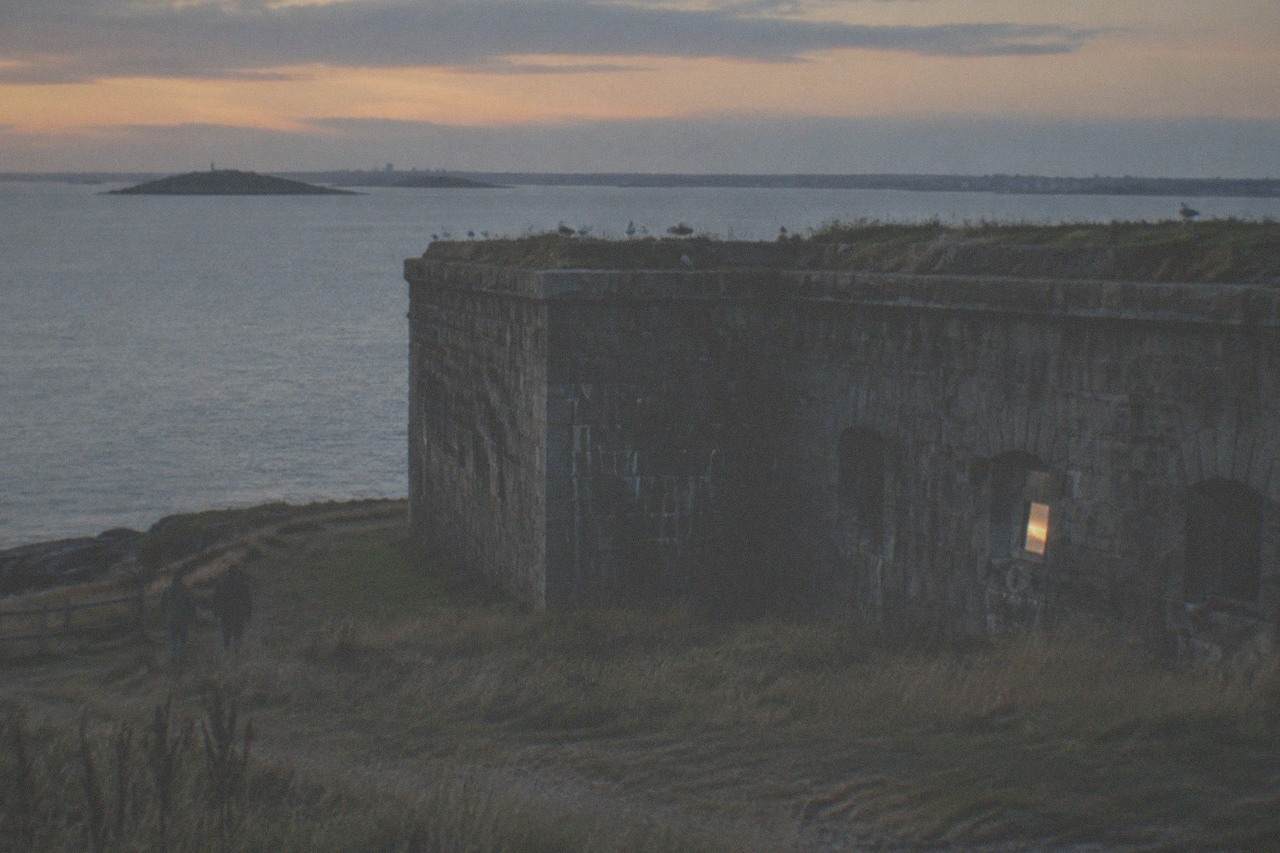
Fort Warren is a pentagonal granite fort on Georges Island in Boston Harbor, built in the 1830s through 1860s and used as a Civil War prison for roughly 2,300 Confederate prisoners, with only 13 deaths recorded. The Lady in Black ghost is folklore popularized in 1944, not documented history. No tour on this roster covers the harbor islands.
Long Wharf, at the foot of State Street, has ferried Bostonians in and out of the harbor since roughly 1710 to 1721, when a wharf longer and deeper than almost any other in colonial America was built out into deep water. The National Park Service records British troops landing there in 1768, wounded soldiers from Bunker Hill passing through in 1775, and news of the Declaration of Independence arriving by ship in July 1776. Today it is the practical departure point for one of the most storied ghost tales in Massachusetts, though not one that belongs to the wharf itself. The legend in question lives about 45 minutes out across the water, in the corridors of Fort Warren on Georges Island, and it is a story this site treats as folklore rather than fact. The distinction matters. Fort Warren's documented history is remarkable enough without decoration, and the 1944 book that made the Lady in Black famous opened with a disclaimer from its own author.
This guide separates the two cleanly. First the fort as the record shows it: a Third System coastal fortification, a training camp, a Civil War prisoner-of-war site that held roughly 2,300 Confederate military personnel, sailors and political figures, and a National Historic Landmark today. Then the legend, told as legend, with its origin in a specific mid-century paperback and its author's own admission that he offered it without the slightest guarantee any part of it was true. Finally, the practical questions: how the ferry actually works, what Long Wharf's own history really is, and what a visitor who wants an after-dark Boston history experience can genuinely book, since no product on this site's roster covers the harbor islands at all.
What Is Fort Warren On Georges Island?
Fort Warren is a pentagonal granite star fort on Georges Island in Boston Harbor, designed and largely built between the 1830s and 1860s as part of the Third System of American coastal fortifications. The federal government bought the island in 1825, the fort was named for Dr. Joseph Warren, who was killed at Bunker Hill, and it was largely complete by 1861. It is now a National Historic Landmark inside the Boston Harbor Islands recreation area.
The Third System was the early republic's answer to a simple problem: harbor cities needed heavy fixed defenses, and Boston's had to guard one of the most important ports on the Atlantic coast. Georges Island, sitting in the outer harbor, was the natural place for the biggest of them. The pentagonal bastion design, the classic star-fort geometry of the era, was meant to present no blind corners to an attacking force while layering artillery fire across the water approaches. The fort mounted heavy ordnance during its service life, including 15-inch Rodman guns, though it never fired a shot in major combat.
Warren himself never saw the fort that carried his name. Dr. Joseph Warren was a Boston physician and political leader, killed at the Battle of Bunker Hill in June 1775, decades before the first stone was laid. Naming forts for Revolutionary martyrs was a common practice in the Third System era, a way of tying new military construction to the founding generation. The Warren family connection to the fort's name is the only Revolutionary association it has; the fort's own story belongs entirely to the era of its construction and its later military service, from the Civil War through the Spanish-American War and both World Wars, before the Army decommissioned it in 1950.
Massachusetts acquired the island and fort in 1958, and the site passed into the state and then national recreation area that today manages the Boston Harbor Islands as a public park. Visitors can walk the fort's corridors and casemates in the warmer months, picnic on the grounds, and in some seasons join ranger-led interpretation of the site. That access is real and worth planning for. The ghost, as the sections below show, is another matter entirely.
What Real History Does Fort Warren Document?
The documented record is substantial and surprisingly humane for a prison. From October 1861, Fort Warren served as a Union prisoner-of-war camp, holding roughly 2,300 Confederate military personnel, sailors and political prisoners over the war, and only 13 deaths occurred there. Its first commander, Col. Justin Dimick, allowed prisoners parole-like movement on the grounds, newspapers, and goods sent from Boston.
Those numbers deserve a moment of attention, because they frame everything a visitor hears on the island. A Civil War prison with roughly 2,300 prisoners and 13 deaths sits far from the horror of Andersonville or Elmira, where thousands died. Historians credit the command: Dimick ran the fort through the opening war years, and the treatment records show prisoners walking the grounds under parole-like conditions, reading newspapers, and buying goods from the city. High-profile prisoners passed through, including Alexander H. Stephens, the Vice President of the Confederacy, held from May to October 1865 after the war's end.
The fort was also a training ground before and alongside its prison role. Massachusetts Union regiments trained on Georges Island, and one of American music's stranger origin stories happened here: soldiers at the fort are credited with composing "John Brown's Body," the marching song that Julia Ward Howe later reworked into "Battle Hymn of the Republic." Howe, of course, was a Boston writer, which makes the Fort Warren connection to the hymn a genuinely local piece of Civil War history, fully documented and requiring no ghost at all.
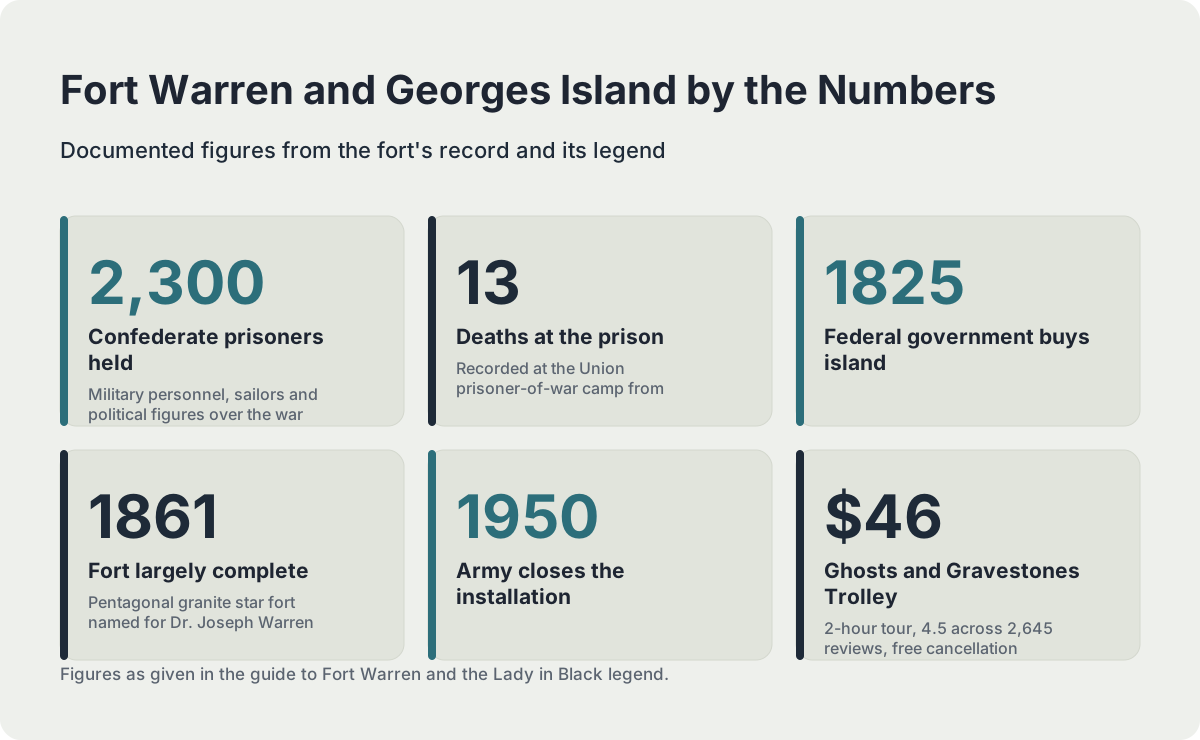
Later service kept the fort in military use well past the Civil War. Endicott-era modifications updated its armament for the Spanish-American War generation, anti-aircraft additions came during the World Wars, and the Army finally closed the installation in 1950. An island fort that had guarded the harbor for a century became a park, and its narrative passed from the War Department to historians and park rangers. That transition matters for this guide, because what the park service and historians record about Fort Warren, and what the ghost-tour tradition says about it, are two different literatures with two different standards.
Who Is The Lady In Black Of Fort Warren?
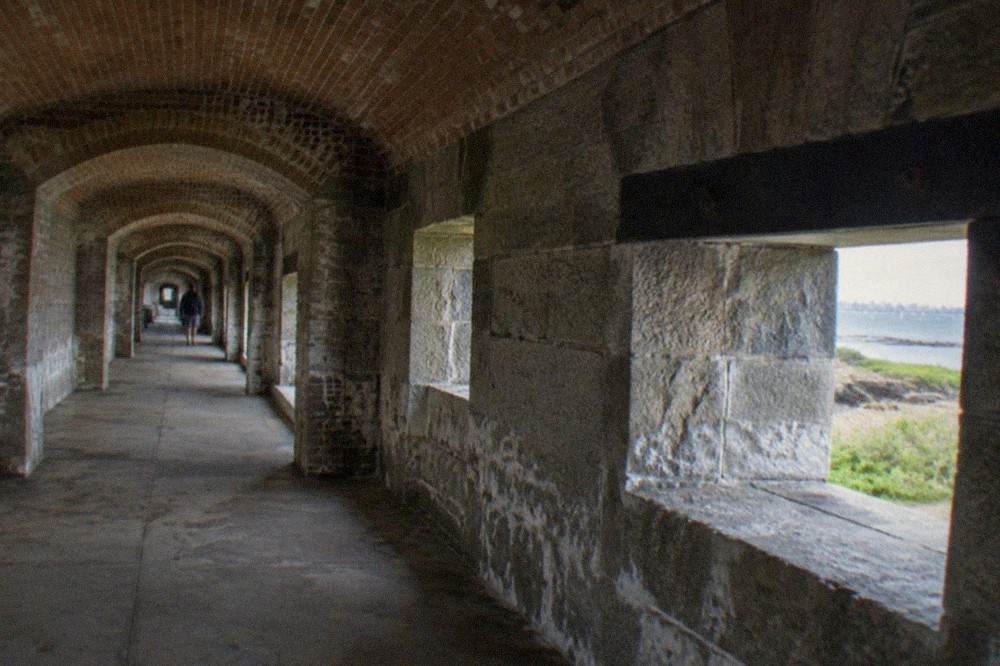
The Lady in Black is a ghost story in which a Southern woman, often named Melanie Lanier, disguises herself as a soldier and rows from Hull in early 1862 to rescue her imprisoned Confederate husband at Fort Warren. The plot is discovered, her husband is accidentally shot, she is executed as a spy, and her ghost walks the corridors in black. No historical record supports any of it.
The tale as usually told runs like this: the newlywed wife of a Confederate officer held at Fort Warren crosses the freezing harbor, sneaks toward the fort through a musket embrasure or a planned tunnel, and reaches her husband before the alarm goes up. In the chaos of the escape attempt, the husband is shot, killed by his own rescuers' misfortune. She is captured, tried, and hanged as a spy, granted a last request for a black dress, the only women's clothing anyone can find, and buried nearby. Since then, the story goes, visitors have heard or seen her wandering the dungeons and corridors of the fort.
The source of the modern legend is identifiable and, unusually for folklore, honest about itself. The historian and author Edward Rowe Snow popularized the story in his 1944 book The Romance of Boston Bay, and Snow prefaced the tale by saying he offered it without the slightest guarantee that any part of it was true. That preface is the single most useful sentence in this whole subject. A popular mid-century author told a gripping harbor-island ghost story and told his readers, in the same breath, that he could not vouch for it.
Later researchers went further and could not find anything behind it. No contemporary newspaper account, no military record, no primary document records a woman hanged as a spy at Fort Warren, or any female execution there during the Civil War era. Historians who examined the story noted the total absence of evidence, and the broader record of the Civil War's spy executions makes a Fort Warren hanging even less likely: the only woman executed in connection with that war was Mary Surratt, hanged in Washington for the Lincoln assassination conspiracy. A second claimed detail, the prisoner's wife rowing from Hull, sits awkwardly against the fort's documented treatment regime, in which prisoners enjoyed grounds access, newspapers and goods from Boston, hardly the setting for a desperate armed rescue.
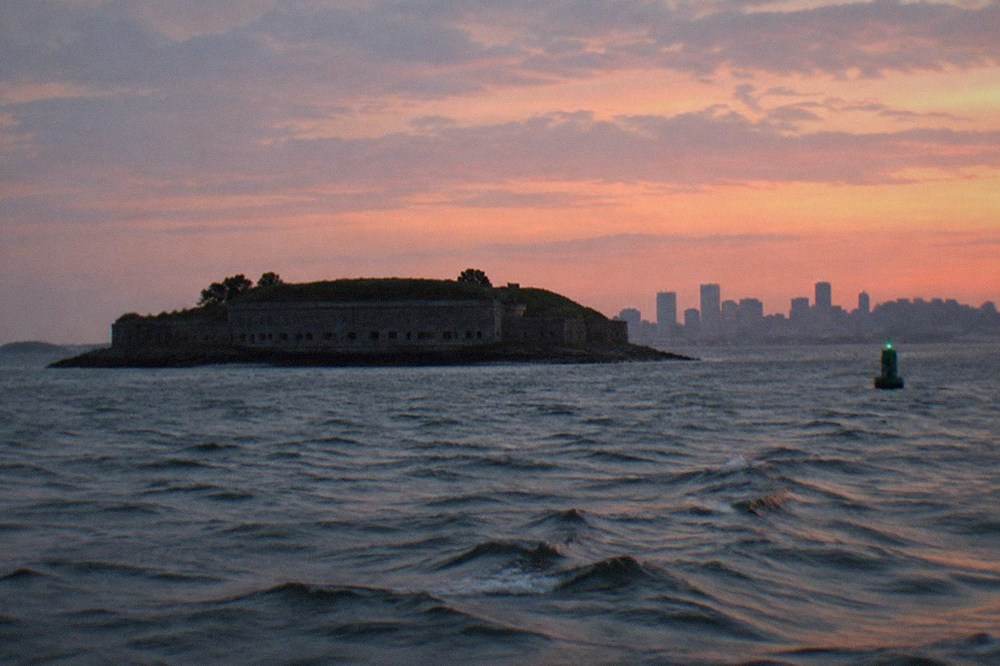
None of this makes the legend worthless. It makes it folklore, which is a different thing with different rules. Ghost stories are part of how a region remembers its places, and the Lady in Black has done real work in keeping Fort Warren in the public imagination for eighty years. Guides on the islands and in Boston retell it, and listeners shiver pleasantly. The honest framing is simply this: the fort's documented history comes from military records and historians; the Lady in Black comes from a 1944 book whose author flagged it as unverifiable, and the document trail behind her has never materialized.
The distinction between documented history and folklore is exactly the discipline a good ghost tour applies, and Boston has one bookable product that shows it. The 2-Hour Ghosts and Gravestones Trolley, run by Historic Tours of America, leans on the city's documented burying grounds and its own company history dating to 1998, and its listing shows 4.5 across 2,645 reviews, from $46, with free cancellation. Nothing about that trolley touches the harbor islands, and this guide asserts no connection between the two, but for a reader who likes history served with atmosphere and doesn't want to cross the water, it is the closest real after-dark Boston product on this roster. The site's companion piece, the Boston Ghost Tours overview, walks through that in more depth.
How Does The Legend Stack Up Against The Records?
A side-by-side reading shows the story and the documents diverge at every checkable point. The records document 2,300 prisoners, 13 deaths, humane command under Col. Justin Dimick and no female executions; the legend requires a female spy hanged at a fort whose command regime was notably lenient, first printed in 1944 by an author who disclaimed it. The table below sets the two accounts against each other claim by claim.
| Claim from the legend | What the documented record shows | Verdict |
|---|---|---|
| A Confederate officer's bride rowed from Hull to rescue him in early 1862 | No record of any such rescue attempt; prisoners had grounds access under parole-like conditions | Unsupported |
| Her husband was accidentally shot during the escape | No fort record or contemporary account of a prisoner death in such circumstances | Unsupported |
| She was tried and hanged as a spy at Fort Warren | No female execution at the fort is documented; the only woman executed in connection with the Civil War was Mary Surratt, in Washington | Unsupported |
| Her ghost walks the dungeons in black | Anecdotal reports only, popularized from 1944 onward | Folklore |
| The fort held Confederate prisoners in grim conditions | Roughly 2,300 prisoners held, 13 deaths, lenient command under Col. Justin Dimick | Real history |
The pattern in that table is worth naming. Every element of the legend that can be checked against a record fails the check, and every element that cannot be checked, the ghost herself, survives only as story. That is the standard shape of a well-made ghost tale: it wraps an unverifiable supernatural core in historical furniture, a real fort, a real war, real prisoners, that borrows credibility from genuine events. The furniture here is all real. The core is not.
There is a second lesson in the dates. Snow's book appeared in 1944, nearly eighty years after the events it describes and roughly eighty years before today. Nothing in the fort's voluminous Civil War paperwork surfaced a hanging in the interim, and the historians who went looking after the legend became popular published their findings: nothing. Folklore does not need documents, but a guide does, and this site will keep attributing the tale to guides, legend and Snow's book rather than asserting it as history.
How Do You Get To Georges Island From Boston?
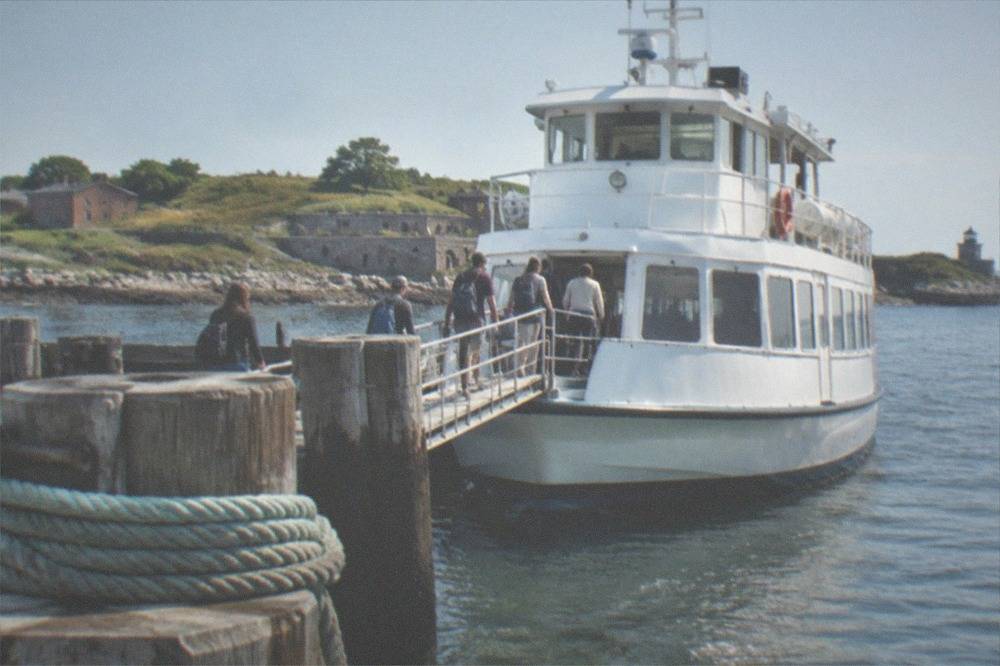
Seasonal public ferries run to Georges Island from mid-May through mid-October, departing from Long Wharf North in Boston on a roughly 45-minute crossing, plus sailings from Hingham. Adult round-trip fares have run in the $25 range in recent seasons, sold through Boston Harbor City Cruises. The 2026 season resumed around May 15 after repairs to the island's water main.
The ferry schedule works in three seasonal blocks: spring service from mid-May to mid-June, summer service from mid-June to early September, and a fall block into mid-October, with possible extensions around Indigenous Peoples' Day. Summer typically brings several daily departures from Long Wharf, often around 10 a.m., noon and 2 p.m., with returns in the afternoon and evening. Fall is the window that overlaps with ghost-story season in Boston, and it is also the window most likely to sell out or compress, so anyone planning an October island trip should book the ferry ahead and not assume a walk-up seat (see Salem Day Trip Pairing).
The fort itself rewards real planning. Paths run through the interior, though some areas involve stairs and uneven surfaces, so visitors with mobility constraints should check the current access notes before committing to a crossing. The island offers picnic areas and, in some seasons, ranger-led tours of the fort, which are the closest thing to an official interpretation of both the documented history and, depending on the ranger, the legend told as legend. Ferry operations are subject to weather and staffing, and the official Boston Harbor Islands and cruise operator pages carry real-time updates.
Planning allowances, not promises, for a day trip:
| Item | Planning allowance | Notes |
|---|---|---|
| Ferry crossing each way | About 45 minutes from Long Wharf | Seasonal, mid-May to mid-October |
| Adult round-trip fare | Around the $25 range in recent seasons | Confirm current pricing with the ferry operator |
| Time on the island | Half a day is comfortable | Fort exploration, paths, picnic areas |
| Access inside the fort | Stairs and uneven surfaces in places | Check current access notes before booking |
| Best ghost-adjacent window | The fall ferry block, into mid-October | Overlaps October season; book ahead |
One practical note for readers pairing this with other Boston plans: the crossing leaves from the waterfront, minutes from the Freedom Trail's official 2.5-mile route connecting 16 historic sites, so a morning in the burying grounds downtown and an afternoon ferry is a workable same-day itinerary in summer.
Is Long Wharf Itself Haunted?
No verified haunted or ghost-story association attaches to Long Wharf itself. Long Wharf's documented history is 18th-century commercial and military, built around 1710 to 1721 as Boston's premier deep-water dock, and explicitly finds no ghost stories tied to it. Harbor ghost lore instead centers on other islands, including the Fort Warren legend and Boston Light.
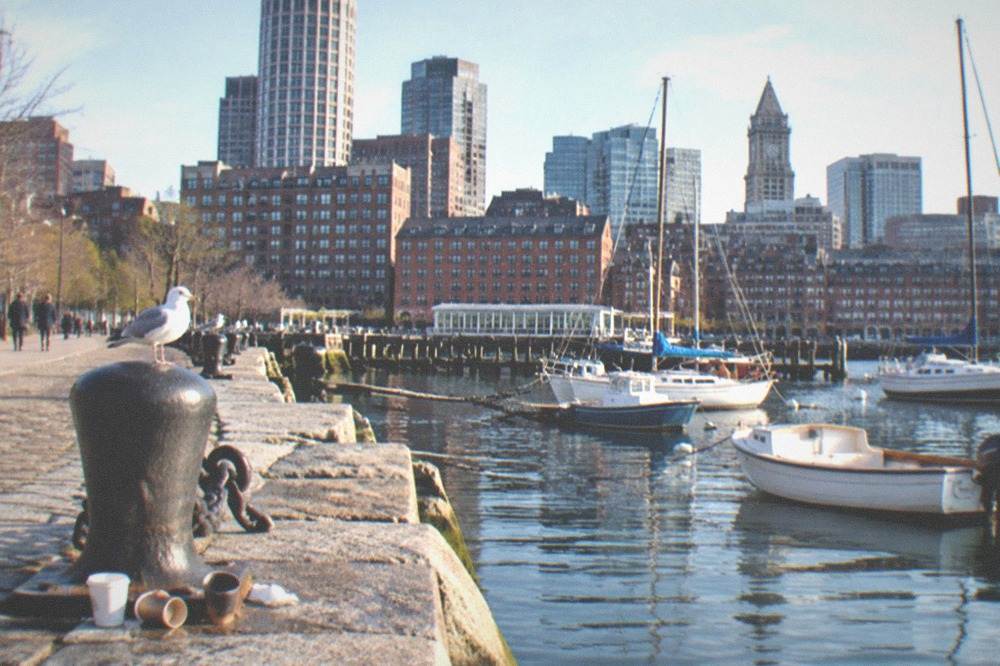
This matters because the wharf's role as the Lady in Black's de facto departure point has tempted some retellings to relocate her story onto Long Wharf, or to imply the wharf has hauntings of its own. No verified ghost stories attach to Long Wharf itself; Searches specific to Long Wharf turn up no verifiable ghost stories, and harbor lore favors other islands instead., and the harbor's ghost traditions belong to other places. The wharf's own history is entirely real and needs no ghosts. Roughly 1,500 to 2,000 feet long at its peak, it let large ships dock and unload straight into warehouses along its length, and by the late 1700s it stood as the premier wharf among around 80 in the city. The National Park Service's page on Long Wharf records the arrivals and departures that define it: Louisbourg victors in 1758, British troops in 1768, the evacuation of March 1776, and John Adams sailing out on diplomatic missions. Land reclamation has since shortened it, and today it serves ferries and sightseeing boats, with surviving structures including the mid-19th-century Custom House Block and the 1760s Gardiner Building, once linked to John Hancock.
The temptation to graft a good ghost onto a good dock is exactly the conflation this guide exists to prevent. The honest geography of the Lady in Black legend, such as it is, runs from Hull across the water to Fort Warren and Georges Island, per the tale as Snow printed it. Long Wharf is where you stand to catch the ferry. Readers who want a haunted-hotel story with actual documented guests behind it, Charles Dickens among them, should look at the Omni Parker House guide, which keeps that building's real history and its folklore separated the same way.
Can You Book A Ghost Tour Of The Harbor Islands?
No. No product on this site's roster covers Fort Warren, Georges Island or any of the Boston Harbor Islands, and this site does not present the Lady in Black legend as a bookable experience. The roster's after-dark products are all Boston-proper walks, one trolley and three pub crawls, and the closest real pairing for an interested reader is the Ghosts and Gravestones trolley, which this guide recommends without asserting any connection between the two.
That answer deserves its full explanation, because search results for Fort Warren often surface ghost-tour marketing from other cities and sites, some of it implying an island product exists. On this roster, the nine bookable products break down as five walking tours in Boston proper ($22 to $35, one to 1.5 hours), one trolley tour (the 2-Hour Ghosts and Gravestones Trolley at from $46, 4.5 across 2,645 reviews), and three haunted pub crawls for visitors 21 and over ($29 to $36). None of them boards a boat. The harbor cruise category that once appeared in early research was dropped from this site's lineup as unverifiable, and it stays off.
The bookable products most relevant to a reader finishing this guide, with the roster's own figures:
| Product (decision name) | Format | Price | Rating and reviews | Free cancellation |
|---|---|---|---|---|
| 2-Hour Ghosts and Gravestones Trolley | Seated trolley, 2 hours | From $46 | 4.5 across 2,645 reviews | Yes |
| 1-Hour Underground Ghost Walk | Walking, 1 hour | From $26 | 4.0 across 274 reviews | Yes |
| 1.5-Hour Night-Time Ghost Walk | Walking, 1.5 hours | From $30 | 4.5 across 313 reviews | Yes |
The practical itinerary for a reader who wants both the legend and a bookable tour is a two-part day or weekend. Do the islands yourself: take the seasonal ferry from Long Wharf, walk Fort Warren on your own, and read the history before you go so you can tell the records from the story. Then book the city side: the trolley, which the site covers in detail in a dedicated piece on what the trolley tour covers, or a walking tour if you prefer to stay on foot. Walking options include the 1-Hour Underground Ghost Walk, the cheapest walking tour from US Ghost Adventures on the roster, rated 4.0 from 274 reviews, and the 1.5-Hour Night-Time Ghost Walk from Ghost City Tours, the most-reviewed walking tour at 4.5 from 313 reviews, from $30.
For a first-time visitor weighing the two formats, the trolley has two structural advantages for a history-first evening. It covers ground between sites that a walking tour cannot reach in two hours, and its 2,645-review pool is by far the largest on the entire roster, which gives its 4.5 rating a statistical weight that smaller pools cannot match. A walking tour, by contrast, gets you inside the burying grounds at street level, on foot, at night, closer to the stones. The site's full comparison of the two formats breaks that tradeoff down in detail.
What Should You Actually Remember About The Lady In Black?
Remember it as a great ghost story with a traceable origin: a 1944 book by Edward Rowe Snow, who prefaced it by saying he offered it without the slightest guarantee any part was true. Remember Fort Warren as real history: 2,300 prisoners, 13 deaths, a fort that never fired in major combat and is now a National Historic Landmark park. And remember that no bookable tour on this roster connects the two.
There is a certain elegance in Snow's disclaimer that is worth sitting with. A writer with a gift for New England storytelling published a book about the romance of Boston Bay, a title that told readers up front what genre they were holding, and flagged his best ghost story as unverifiable in the preface. Eighty years later, the story has outlived the disclaimer, and it circulates in retellings that drop the disclaimer entirely. This site's job is to keep the disclaimer attached, because a reader who hears the legend as history walks away with a false picture of Fort Warren, and one who hears it as folklore walks away with the better story: a real prison with a remarkably humane record, in a real star fort, reachable by a real ferry.
The pattern also repeats elsewhere in Boston's haunted landscape. The Omni Parker House carries folklore about a haunted room and Harvey Parker's ghost alongside thoroughly documented facts, an 1855 opening, 551 rooms and guests including Dickens, John Wilkes Booth and JFK, and the site's guide to that hotel's real history applies the same separation. The burying grounds on the walking tours work the same way: Granary's graves are real and verifiable, Samuel Adams, John Hancock, Paul Revere, the Boston Massacre victims among them, while the apparitions reported there are tour lore (see Revere's Grave). Boston is unusual among haunted destinations in how much of its material is simply the historical record, which is the site's honest pitch for it.
For the bookable half of the evening, the full roster in brief: five walking tours from $22 to $35, one trolley at from $46, and three 21+ pub crawls from $29 to $36, every listing free-cancellation except the 1.5-Mile Haunted Streets Walk, which does not carry it. The 1.5-Hour Night-Time Ghost Walk from Ghost City Tours remains the most-reviewed walk on the roster, and the underground walk remains the cheapest way to test whether a Boston ghost tour suits you at all.
The trolley, meanwhile, is the product this site pairs most often with the historic reads, and the pairing logic is straightforward rather than spooky: it is a two-hour, seated, after-dark tour of the city's documented sites, run by Historic Tours of America, whose Ghosts and Gravestones brand dates to 1998 in Boston. Its listing shows 4.5 across 2,645 reviews, from $46, with free cancellation, and it meets at the Old Town Trolley stop at 200 Atlantic Ave, at the end of the Marriott Long Wharf Hotel. That meeting point sits a short walk from the Long Wharf ferry pier, so an October visitor can genuinely do the island crossing in the afternoon and the trolley in the evening, two separate products, two separate stories, no invented connection between them.
Whether the Lady in Black is true is a question the documents have already answered. Whether she is a good story, worth telling on a ferry deck on the way out to her fort, is a question eighty years of readers have answered too. Go for the history, tell the legend as legend, and book the city's real tours for the night.
Common Questions About Fort Warren And The Lady In Black
Is The Lady In Black A True Story?
As history, no. The tale traces to Edward Rowe Snow's 1944 book The Romance of Boston Bay, and Snow himself prefaced it by saying he offered it without the slightest guarantee any part of it was true. No contemporary record, military document or newspaper account supports a woman being executed as a spy at Fort Warren. As a ghost story, it remains the best-known legend of Boston Harbor.
Can You Visit Fort Warren On Georges Island?
Yes, seasonally. Public ferries run to Georges Island from mid-May through mid-October, departing from Long Wharf North in Boston on a roughly 45-minute crossing, with additional sailings from Hingham. The 2026 season resumed around May 15 after water main repairs. Visitors can explore the fort, though some interior areas involve stairs and uneven surfaces.
How Do You Get To Georges Island From Boston?
Take the seasonal passenger ferry from Long Wharf, about a 45-minute crossing, with several daily departures in summer. Adult round-trip fares have run in the $25 range in recent seasons, sold through Boston Harbor City Cruises. Schedules are seasonal and subject to weather, so check the official Boston Harbor Islands pages before planning.
Is Long Wharf Haunted?
No verified ghost story attaches to Long Wharf itself. The research record documents its 18th-century commercial and military history and explicitly finds no haunted association. Harbor ghost lore centers on other places, including the Fort Warren legend on Georges Island and traditions around Boston Light.
Is There A Boston Ghost Tour That Visits The Harbor Islands?
No. None of the nine bookable products on this site's roster covers Fort Warren or the harbor islands; the roster is five walking tours, one trolley and three pub crawls, all in Boston proper. The islands are best treated as a self-planned ferry trip, and the Ghosts and Gravestones trolley is the closest bookable after-dark history product, with no connection between the two.
What Is The Scariest Haunted House Attraction In Massachusetts?
No jump-scare haunted house attraction is bookable on this roster; this site covers guided tours of documented haunted history, not commercial haunted houses. Large seasonal attractions such as Fear Town in Seekonk and Spooky World in Litchfield, New Hampshire do operate in the region, but they are separate businesses, and dates and hours change yearly.