What Were The Salem Witch Trials?
A plain-history account of the 1692 Salem witch trials: how the accusations began, how the court reached its verdicts, how it all ended, and how Boston ghost tours retell the story today.
What Were The Salem Witch Trials?
The Salem witch trials were a nine-month legal panic in the Massachusetts Bay Colony in 1692, in which more than 200 people, mostly women, were accused of witchcraft. Nineteen convicted people were hanged, one man was pressed to death, and at least five others died in jail before the special court was dissolved in October 1692 and the remaining prisoners were pardoned by May 1693.
That is the short version, and every clause of it comes from the historical record rather than from the haunted-attraction industry that grew up around the events centuries later. The long version is stranger, sadder, and more human. It began not in the town of Salem itself but in Salem Village, which is today the separate town of Danvers, with two young girls in a parsonage, and it spread through a colony already strained by frontier war, religious tension, and a legal system with no police to separate rumor from evidence.
The reason this history matters on a Boston ghost tour site is straightforward. Nearly every ghost walk in downtown Boston passes burying grounds that hold people connected to the same colonial world that produced the trials, and Salem itself sits about 15 miles north of Boston, close enough that visitors routinely pair a haunted Boston evening with a Salem day trip. Understanding what actually happened in 1692 makes both halves of that pairing richer. The story the tours tell is real, in a way that most ghost stories are not.
The trials unfolded in three distinct phases, and keeping them separate is the easiest way to avoid the muddle that popular retellings create. First came the fits and the first accusations in Salem Village, in the winter and early spring. Second came the special court in Salem Town, the Court of Oyer and Terminer, which sat from June and hanged people through the summer. Third came the collapse: the court dissolved, a new court rejected the old methods, and the colony spent the following decades quietly trying to repair what it had done, including compensation to some surviving families in 1711.
How Did The Panic Begin In February 1692?
The trouble began in January or February 1692, when two young girls in the household of Reverend Samuel Parris, nine-year-old Elizabeth Parris and her eleven-year-old cousin Abigail Williams, suffered unexplained fits. A doctor suggested witchcraft, the girls began naming people, and the first formal complaints in late February targeted three women: Tituba, Sarah Good, and Sarah Osborne.
Elizabeth Parris was the minister's daughter and Abigail Williams his niece. The fits the historical record describes, convulsions and contortions that the adults around them could not explain, came at the end of a hard winter in a household full of religious intensity. The colony's medical understanding offered no diagnosis that satisfied the family, and the suggestion of witchcraft did something no illness could: it supplied a cause that could be investigated, and accused people who could be named.
The three women first named bore little in common beyond their vulnerability. Tituba was enslaved in the Parris household, and she confessed under pressure, then named others, which turned a private crisis into a public one. Sarah Good was a beggar with a ruined reputation. Sarah Osborne was an elderly woman who had defied local convention by marrying her indentured servant. None of the three had standing to defend herself, which is precisely why the accusation machine rolled over them first and then kept rolling.
From there the accusations spread outward across Salem Village and the surrounding towns, eventually touching more than 200 people, among them men and even children, though the overwhelming majority of the accused were women. Historians reading the episode now point to the wider pressures of 1692: a frontier war with Wabanaki peoples that had displaced refugees into Essex County, simmering disputes between Salem Village and the wealthier Salem Town, and a Puritan worldview in which the devil was treated as a real and active participant in daily life.
If reading this chronology makes you want to stand on the ground where colonial Boston buried its dead, the walking options are covered in detail elsewhere on this site. The cheapest of them starts at Boston Common, with the price listed on the live booking page.
Why Did Neighbors Accuse Neighbors In Salem Village?
Accusations spread because the court accepted "spectral evidence," testimony that the accused person's spirit or specter had appeared to and tormented the afflicted, a standard no modern court would recognize. Once the mechanism was in place, grievance, fear, and self-protection all flowed through it, and neighbors used it against neighbors, sometimes over debts, land, and old quarrels.
Spectral evidence is the hinge of the whole story, and it deserves a plain explanation. In 1692 Massachusetts, an accuser could testify that the accused's specter had pinched, bitten, or appeared to them, and the court could treat that testimony as evidence against the living person. The accused, meanwhile, had almost no way to disprove a claim about what their supposed spirit had done while they slept. It was a legal structure in which denial looked like guilt.
The disputes underneath the accusations were often ordinary. The surviving records show longstanding feuds over property lines, unpaid debts, church membership, and village governance resurfacing in witchcraft complaints. Some accusers were almost certainly sincere, in the sense that they experienced what they described. Others, historians argue, learned quickly which complaints the court rewarded with attention and power. A fourteen-year-old could silence an adult with a well-timed fit.
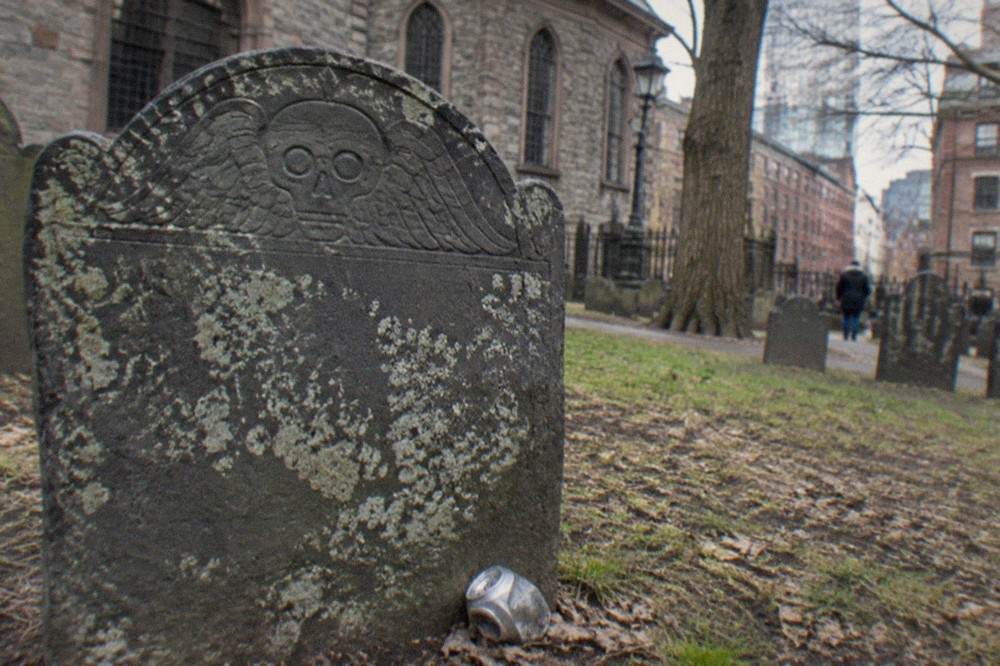
Not everyone went along quietly. Boston ministers, including Increase Mather, publicly attacked spectral evidence as unreliable, arguing that the devil could assume innocent people's shapes and that a specter's appearance proved nothing about the person it resembled. That argument, grounded in theology rather than Enlightenment skepticism, became one of the decisive forces against the court, because it let devout judges and officials retreat from the panic without abandoning their faith.
The trials' deepest lesson, and the reason the name still carries weight three centuries later, is that the panic required no central villain. It required a frightened community, a legal process that rewarded accusation, and people who found that naming a witch was cheaper than answering for a grudge.
How Did The Court Reach Its Verdicts?
Governor William Phips established a special Court of Oyer and Terminer in May 1692, which tried cases using spectral evidence and coerced confessions. Bridget Bishop was hanged on June 10, 1692, the first of nineteen executions by hanging that summer and fall, while Giles Corey was pressed to death in September for refusing to enter a plea.
"Oyer and Terminer" is old legal French meaning, roughly, to hear and determine, and the court's speed matched its name. It sat in Salem Town, heard accumulated cases in batches, and executed in batches too. Bridget Bishop, a tavern keeper with a history of conflict with her neighbors, went to the gallows first, in June. The remaining hangings followed through the summer and into the fall, at intervals that let the colony absorb them as routine.
Confession was the court's preferred outcome, and the reason was grimly practical. Those who confessed, naming others as fellow witches in the process, were seen as reclaimable souls and were largely spared the gallows, their sentences deferred while the court pursued the people they named. Those who maintained innocence to the end, like Bishop, were the ones hanged. The system thus selected for the defiant and spared the cooperative, and it fed itself on every confession it extracted.
Giles Corey's death stands apart. Pressed to death means killed under weights, an old English punishment for defendants who refused to plead, since a plea was needed before property could be forfeited on conviction. By refusing to enter one, Corey, an eighty-year-old farmer, prevented the court from seizing his farm for the state, and tradition holds he endured days under the stones. He is the only person in the American colonies recorded as dying that way for witchcraft, and the detail that survives in popular memory, his alleged final demand for "more weight," belongs to tradition rather than to a verified transcript.
The total execution count across the episode is twenty. Nineteen people were hanged, five of them men. Giles Corey was pressed. At least five more accused people, among them infants, died in jail while awaiting a legal process that never reached them. More than 200 had been accused across the region before the machinery stopped.
| 1692 Chronology | What Happened |
|---|---|
| January to February | Fits begin in the Parris household; a doctor suspects witchcraft |
| Late February | First complaints name Tituba, Sarah Good, and Sarah Osborne |
| May | Governor Phips establishes the Court of Oyer and Terminer |
| June 10 | Bridget Bishop hanged, the first execution |
| Summer to fall | Hanging executions continue through October, nineteen in total |
| September | Giles Corey pressed to death for refusing to plead |
| October | Phips dissolves the court amid criticism of spectral evidence |
| May 1693 | Remaining prisoners pardoned by the new court's process |
How Did The Trials End In October 1692?
The Court of Oyer and Terminer was dissolved in October 1692 by Governor Phips, as opposition to spectral evidence mounted, and the replacement court rejected that method, secured no further witchcraft convictions, and had its last prisoners pardoned by May 1693. The colony later repudiated the episode, and some families received compensation in 1711.
The end came not with a dramatic reversal but with a quiet administrative decision to stop. Increase Mather's case against spectral evidence gave officials a respectable exit, and the tide of local opinion, which had swung hard behind the afflicted girls in spring, swung just as hard the other way once the hangings began to include people of standing and once the accusations reached families close to power. Phips, who had created the court, dissolved it. The new Superior Court of Judicature that followed heard the remaining cases and convicted no one of witchcraft.
Repudiation took longer. In 1711 the Massachusetts legislature granted compensation to some surviving families of the executed and of those who had died in prison, an official acknowledgment that a wrong had been done, if a partial one. Not every executed person was named in the restitution, and formal apologies from the modern state, along with exonerations of the last unexonerated defendants, came only in later centuries, piecemeal, as historians and descendants pressed the point.
What the trials left behind is measurable in a small table of outcomes, all drawn from the historical record:
| The Trials By The Numbers | Figure |
|---|---|
| People accused, 1692 to 1693 | More than 200 |
| Executed by hanging | 19 |
| Pressed to death | 1, Giles Corey |
| Known deaths in jail | At least 5 |
| Month the court was dissolved | October 1692 |
| Year of legislative compensation | 1711 |
For a city like Boston, which likes to remember the Revolution and the Founding Fathers, the trials are the skeleton in the colonial closet. The Massachusetts Bay Colony that Boston led was the same polity that hanged its neighbors over spectral evidence, and Massachusetts was also where ministers and officials eventually did the hard work of stopping it. Both halves of that record sit a few feet from each other downtown, on burial slates older than the nation.
How Do Ghost Tours Tell The Salem Story?
Boston's ghost walks mostly do not retell the Salem trials directly, since the executions happened 15 miles north, but they walk the same colonial world: burying grounds from the 1630s onward, hanging sites of the era, and hotel folklore from the century that followed. Tours attribute the legends honestly, saying "guides tell" or "legend says" rather than presenting folklore as fact.
That distinction matters more on this topic than on almost any other, because the trials are one of the few ghost-tour subjects where the verifiable history is darker than the legends. The 1-Hour Underground Ghost Walk, run by US Ghost Adventures from 139 Tremont Street at Boston Common, leans into that approach, covering gravestones and gunpowder across an hour for from $26, with a 4.0 rating across 274 reviews on its listing. The burying grounds it passes, Granary and King's Chapel among them, hold Boston's colonial dead, people of the same generation that watched the Salem panic unfold from a safe distance and, in some cases, criticized it from Boston pulpits.
If the trials themselves pull you toward Salem rather than Boston, the Salem day trip ghost tour pairing guide lays out a self-planned route, since no Boston-origin haunted Salem tour exists on this site's roster, with train and ferry logistics worked through in detail. The 1.5-Hour Night-Time Ghost Walk, meanwhile, is the walking option for visitors who want Boston's own colonial haunts told at night, meeting outside King's Chapel Burying Ground at 58 Tremont Street, from $30, with a 4.5 rating across 313 reviews. King's Chapel Burying Ground was already old when the trials happened, established in 1630, and a walk through it puts the 1692 panic in a longer, darker continuity of colonial Boston.
Ghost storytelling about this period works best when it keeps the two registers separate. The documented facts, who was hanged, when, by which court, are settled history and can be stated as such. The hauntings, the spirits of the wrongly executed said to linger in Salem, the spectral riders of local legend, are folklore, and honest tours label them that way. When a guide tells you a Salem ghost story, the pleasure is in the telling; when the same guide tells you Bridget Bishop died on June 10, 1692, that is a fact you can check against the court records.
For context on whether the ticket is worth it at all, the piece on whether Boston ghost tours are worth it weighs the value question against real prices and review pools, and the question is worth asking here too: the trials history is free to read, but the haunted Boston framing around it is what a ticket actually buys.
Can You Still Visit The Real Salem Today?
Yes, Salem today is a real, walkable city about 15 miles north of Boston, and its trial-related sites are genuine: the Witch House, home of Judge Jonathan Corwin, is the only surviving structure directly tied to the 1692 trials, while the Salem Witch Museum presents the story through staged audiovisual exhibits. There is no surviving gallows site to tour.
The Witch House on Essex Street was the home of Jonathan Corwin, one of the magistrates who investigated and tried the cases, and it is the only standing structure in Salem with direct ties to the trials. A self-guided tour walks you through 17th-century domestic life and the judge's world. The Salem Witch Museum, opposite Salem Common, tells the trials story with life-size figures and staged sets, plus a second exhibit on how perceptions of witchcraft changed afterward. The Peabody Essex Museum holds original documents and objects from the period among its collections.

Getting there is simple, and the practical numbers hold steady: the MBTA Commuter Rail runs from North Station to Salem in about 32 minutes at fares typically from $3 to $9 one-way, per the official MBTA schedules. A seasonal ferry, roughly a 50-minute crossing, runs from Long Wharf in the warmer months at around $25 one-way. Driving takes 25 to 50 minutes depending on traffic, though October parking argues strongly for the train. The visitor pressure is real, and measurable: Destination Salem counted 1.1 million unique October visitors in 2025, and 96,000 people in downtown Salem on Halloween Day itself, so anyone visiting in October should expect company.
| Getting From Boston To Salem | Time | Typical Fare |
|---|---|---|
| Commuter Rail from North Station | About 32 minutes | $3 to $9 one-way |
| Seasonal ferry from Long Wharf | About 50 minutes | Around $25 one-way, $45 round trip |
| Driving, non-rush | 25 to 50 minutes | Parking varies, tight in October |
Visitors who want colonial death closer to Boston can also stay in town: the oldest cemetery in Massachusetts is in Boston itself, and its slates predate the trials by six decades. A fuller walking route through the burying grounds that the trials generation knew is covered in the ghost walk versus trolley comparison, which helps you pick between walking the graves and riding past them.
Why Does The 1692 Story Still Sell Ghost Tours?
The trials sell because they are the rare ghost-tour subject where everything the story needs actually happened: real people, real names, a real court, real bodies, and a real apology from the state afterward. Unlike invented hauntings, the Salem material lets a tour promise history first and legend second, and the customers who show up in October come for that exact combination.
Three centuries later, the draw is still growing rather than fading. Six straight years of above one-million unique October visitors in Salem, record Halloween-day counts, and an entire month-long festival built around a tragedy the colony spent decades trying to forget: there is a strange economy in that. Boston's own tour industry, which has run trolley ghost touring and dedicated walking ghost tours for years, leans on colonial death in the same way, because the graves are genuine and the dates are checkable.
The honest framing is the one this site tries to hold: the trials were a failure of law and community that killed twenty people, and the ghosts are a story people tell about that failure afterward. Boston Ghost Tours covers both, because the walking routes and the history are the same route and the same history, and a reader who knows what actually happened in 1692 will enjoy every lantern-lit retelling more, not less. For the bookable half of the evening, the trio below covers the cheapest walk, the most-reviewed trolley, and the night-time walk, all with ratings and durations taken from the live listings.
Common Questions About The Salem Witch Trials
What Were The Salem Witch Trials?
A nine-month legal panic in the Massachusetts Bay Colony in 1692, in which more than 200 people were accused of witchcraft. Nineteen people were hanged, one was pressed to death, and at least five died in jail before the court was dissolved in October 1692 and the remaining prisoners were pardoned by May 1693.
When Did The Salem Witch Trials Start?
In January or February 1692, when two girls in the Salem Village household of Reverend Samuel Parris suffered unexplained fits and a doctor suggested witchcraft. The first formal complaints, in late February, named Tituba, Sarah Good, and Sarah Osborne.
How Many People Died In The Salem Witch Trials?
Twenty. Nineteen people were executed by hanging between June and October 1692, and Giles Corey was pressed to death in September for refusing to enter a plea. At least five more accused people, including infants, died in jail.
What Was Spectral Evidence?
Testimony that an accused person's spirit or specter had appeared to and tormented the afflicted. The Court of Oyer and Terminer accepted it, which made the accusations nearly impossible to disprove, and its rejection by critics like Increase Mather helped end the trials.
How Did The Salem Witch Trials End?
Governor Phips dissolved the Court of Oyer and Terminer in October 1692 as criticism of spectral evidence mounted. The replacement court rejected that method, convicted no one of witchcraft, and had the remaining prisoners pardoned by May 1693. Compensation to some families followed in 1711.
Can You Visit The Actual Witch Trial Sites In Salem?
Partly. The Witch House, home of trial judge Jonathan Corwin, is the only surviving structure directly tied to the trials, and the Salem Witch Museum and Peabody Essex Museum present the story and hold related objects. No gallows site survives. Salem is about 32 minutes from Boston by commuter rail.