Freedom Trail Ghost Walking Tour: Beacon Hill, The North End And The Burying Grounds
The Freedom Trail stitches together 16 historic sites across 2.5 miles of Boston, and the city's ghost walks run straight down the middle of it. Here is how the trail, the burying grounds, and the five bookable walking tours fit together.
Short answer
The Freedom Trail is a 2.5-mile route connecting 16 historic sites, and every bookable Boston ghost walk overlaps some stretch of it. Five walking tours run $22 to $35 and last 1 to 1.5 hours, most meeting within a block of Boston Common and covering Granary, King's Chapel, or Central Burying Ground.
What Is A Boston Ghost Walk Along The Freedom Trail?
A Boston ghost walk on the Freedom Trail is a guided nighttime walking tour that follows parts of the city's official 2.5-mile historic route, focusing on the burying grounds, execution sites, and documented deaths along it rather than on Revolutionary politics. Five bookable products do this, from $22 to $35, lasting 1 to 1.5 hours, and most start within a block of Boston Common.
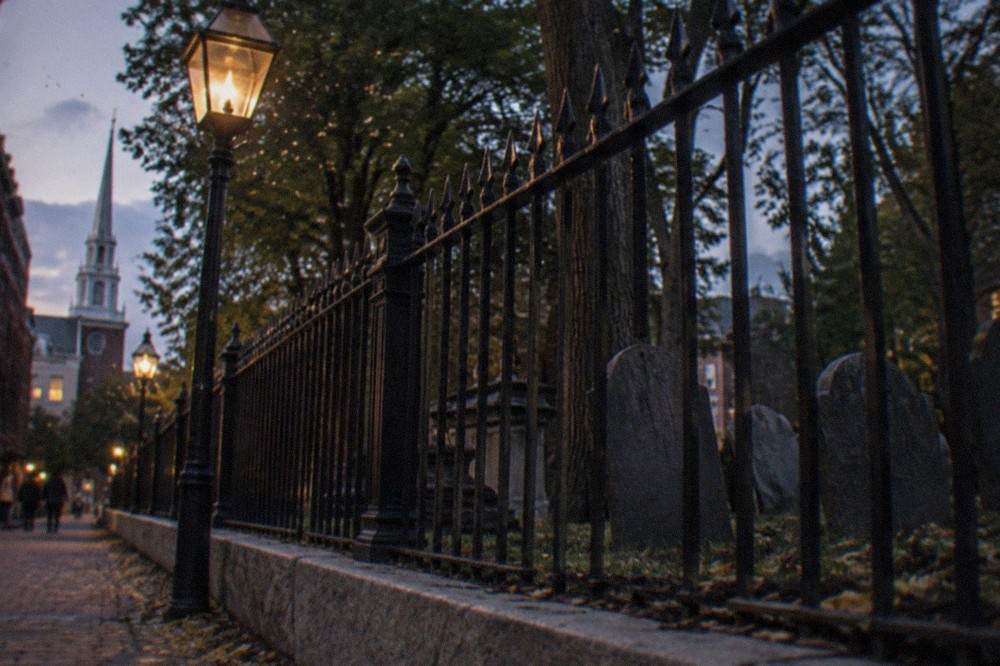
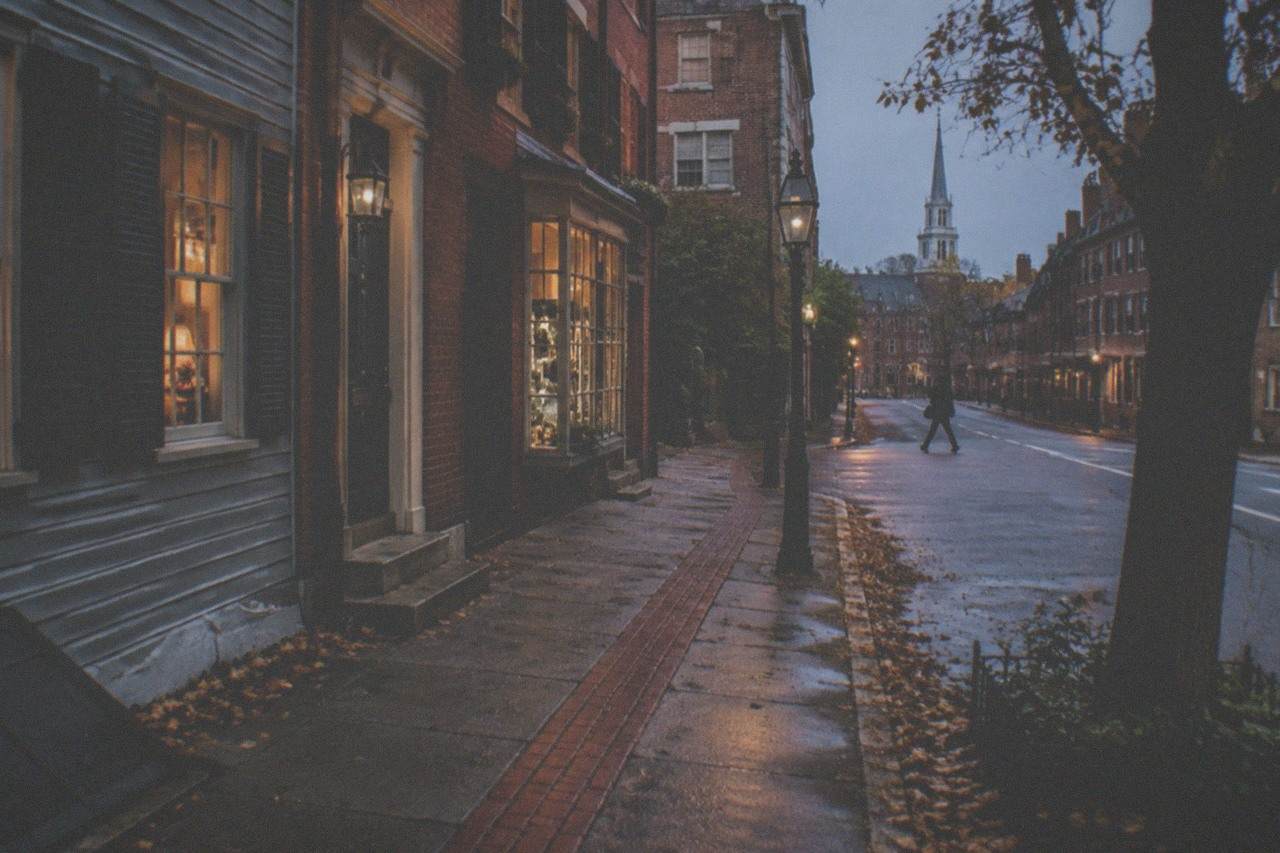
The Freedom Trail Foundation describes its trail plainly: a 2.5-mile line, marked in brick on the sidewalk, connecting 16 nationally significant sites. By day it belongs to school groups and history buffs. After dark, a separate economy opens on the same pavement. Ghost walks take the same corridor, from Boston Common through downtown to the North End, and tell the version of the story the daytime tours skip: the hangings on the Common, the graves moved for a subway, the hotel mirror that Charles Dickens practiced in front of.
This distinction matters for planning. No ghost tour on the current roster advertises itself as a Freedom Trail product, and the Freedom Trail Foundation runs its own seasonal programming, including lantern tours that began in 2018. The five commercial walking tours instead borrow the geography. They start at points the trail passes, stop at burying grounds the trail marks, and finish near the trail's North End stretch. If you have already walked the trail by day, a night walk covers familiar ground with an entirely different script. Guides tell the darker material with attribution, "legend says" and "the story goes," and the strongest tours are honest about which parts are documented history and which are folklore.
The format is consistently walking. One operator, Historic Tours of America, runs a trolley version of the experience, and that option is covered in the site's Boston Ghost Tours comparison pieces, including a dedicated trolley versus walking breakdown. This guide stays with the foot-powered option, because the Freedom Trail is a walking route by design and the burying grounds are only accessible on foot.
What Are The 16 Sites On The Freedom Trail?
The Freedom Trail connects 16 sites, starting at Boston Common and running roughly 2.5 miles through downtown, the North End, and across the Charles to Charlestown. Confirmed stops include Boston Common, the Massachusetts State House, Park Street Church, Granary Burying Ground, King's Chapel and its burying ground, the Old Corner Bookstore, the Old South Meeting House, and the Old State House, ending at Bunker Hill and USS Constitution.
The official directory at the Freedom Trail's own site listing is the source to trust for the full order, and it is worth checking before you plan a day around it. The verified list of named stops, drawn from the trail's own navigation, looks like this:
| Stretch of the Trail | Named Site | Ghost-Walk Relevance |
|---|---|---|
| Start | Boston Common | Site of public hangings into the early 19th century, per tour histories |
| Beacon Hill edge | Massachusetts State House | Meeting point landmark for one walking tour, at 24 Beacon St |
| Downtown | Park Street Church | Adjacent to Granary Burying Ground |
| Downtown | Granary Burying Ground | Three Declaration signers, Paul Revere, Boston Massacre victims |
| Downtown | King's Chapel and King's Chapel Burying Ground | Boston's oldest cemetery, est. 1630, with a headless-woman legend |
| Downtown | Boston Latin School Site and Benjamin Franklin Statue | Birthplace lore and Franklin family graves nearby at Granary |
| Downtown | Old Corner Bookstore | Publisher of Hawthorne, whose fiction draws on Elizabeth Pain's King's Chapel stone |
| Downtown | Old South Meeting House | Gathering point before the Tea Party |
| Downtown | Old State House | Boston Massacre site below its balcony |
| North End through Charlestown | Continued stops through Copp's Hill, Old North Church, Paul Revere House, Bunker Hill and USS Constitution | The trail's second burying ground and its most haunted neighborhood stretch |
The count of 16 is the Foundation's own headline figure, and its most popular guided tour covers only 11 of them. That gap is the honest answer to the question. A daytime Freedom Trail tour and a nighttime ghost walk are different products with overlapping geography, and neither substitutes for the other. The trail's burying grounds close to the public around 4 p.m. in general, per the City of Boston's cemetery pages, so the relationship between the trail and the after-dark tours is closer than it first appears: a ghost walk can show you the fence line and tell the stories, but the stones inside are a daytime sight.
That is also why the site keeps a free haunted Boston guide alongside this one. The burying grounds cost nothing to enter during the day, and walking the trail on your own before booking a night walk is the cheapest way to see the graves up close.
Which Walking Tour Covers The Most Burying Grounds?
The Ghost City "1.5-Hour Night-Time Ghost Walk" has the largest walking-tour review pool at 313 reviews and meets directly at King's Chapel Burying Ground, while the "1-Hour Underground Ghost Walk" is the cheapest one-hour walk at $26 from the Boston Common Visitors Center. The "Common And Beacon Hill Route" is the only 5.0-rated walk centered on the Common's own burying ground, though from just 12 reviews.
The five bookable walking tours break down like this, with every figure taken from the operator listings:
| Tour (Decision Name) | Price | Duration | Rating | Meeting Point |
|---|---|---|---|---|
| 1-Hour Underground Ghost Walk | From $26 | 1 hour | 4.0 from 274 reviews | 139 Tremont St, Boston Common Visitors Center |
| 1.5-Hour Night-Time Ghost Walk | From $30 | 1.5 hours | 4.5 from 313 reviews | 58 Tremont St, outside King's Chapel Burying Ground |
| Death-And-Dying Theme Ghost Walk | From $35 | On the live listing | 4.5 from 230 reviews | 24 Beacon St, in front of the State House |
| Common And Beacon Hill Route | From $22 | 1.5 hours | 5.0 from 12 reviews | Boylston St Subway Station, corner of Boylston and Tremont |
| 1.5-Mile Haunted Streets Walk | From $34 | 1.5 hours, about 1.5 miles | 5.0 from 49 reviews | Shaw and 54th Regiment Memorial, Boston Common |
Route coverage differs more than the prices suggest. The Night-Time Ghost Walk meets outside King's Chapel Burying Ground and works through the downtown corridor, which puts the oldest cemetery in the city at the front of the walk rather than a mid-route stop. The Underground Ghost Walk begins at the Boston Common Visitors Center and, at one hour, is the compressed option: same corridor, less ground, lowest price. The Haunted Streets Walk covers a stated 1.5 miles from the Shaw Memorial, and the Death-And-Dying tour takes the grimmest framing of all, built around causes of death, funerary practice, and the diseases that filled these graveyards.
The Common And Beacon Hill Route deserves a note on honesty grounds. A 5.0 rating looks outstanding on a card, and it is, but it comes from 12 reviews, the smallest pool on the roster. Treat it as a well-reviewed boutique option, not a proven heavyweight. The reviews it has are strong, and the route is genuinely distinct: it is the walk that leans into Central Burying Ground on the Common and the Beacon Hill streets above it, which no other walking product centers on.
If choosing among these still feels close after the table, the site's overall best Boston ghost tour rankings break the decision down by traveler type, budget, and fear tolerance, and they include the trolley and the pub crawls alongside these five walks.
How Do Granary, King's Chapel, And Central Burying Ground Differ?
Granary Burying Ground, established 1660, is Boston's third-oldest cemetery and holds roughly 2,345 markers and an estimated 5,000-plus burials, including Samuel Adams, John Hancock, Paul Revere, and the Boston Massacre victims. King's Chapel Burying Ground, established 1630, is the city's oldest, with 586 surviving markers and likely more than 1,000 interments. Central Burying Ground, established 1756 on Boston Common, holds about 5,000 burials and was disturbed twice by construction.
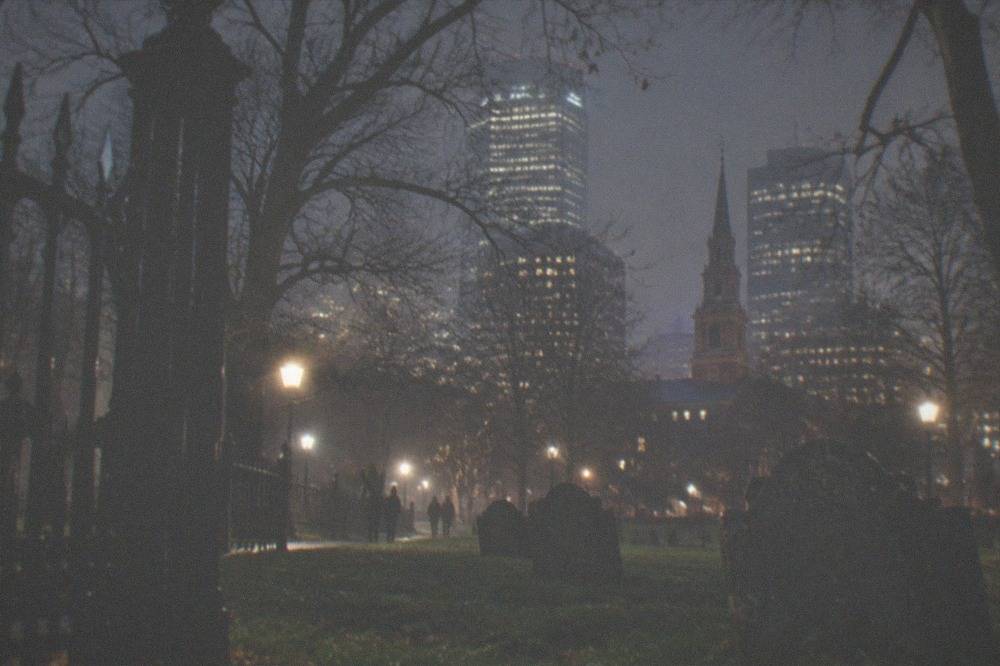
These three graveyards sit within a half mile of each other, and nearly every ghost walk on the roster passes at least one. The City of Boston maintains all of them and opens each daily, from roughly 9 a.m. to 4 p.m., and the city's Granary page, the King's Chapel page, and the Central Burying Ground page carry the hours worth confirming before a daytime visit.
Granary is the celebrity. It holds three signers of the Declaration of Independence, Samuel Adams, John Hancock, and Robert Treat Paine, plus Peter Faneuil and James Otis. One legend attached to the yard concerns Mary Goose, who died around 1690 and whose grave is often linked to the Mother Goose nursery rhymes, though historians trace the archetype elsewhere and find no direct evidence connecting her to the published tales. The ghost lore here centers on James Otis, who died in 1783 after years of mental decline, reportedly struck by lightning; operators describe a tall figure in colonial dress. That is tour narrative, not documented history.
King's Chapel Burying Ground is the oldest. Established in 1630 with the settlement itself, it predates the adjacent church by nearly sixty years, and tradition holds that Isaac Johnson was the first person buried there. Its notable graves include Governor John Winthrop, the Reverend John Cotton, and Mary Chilton, believed to be the first woman to step off the Mayflower. The stone of Elizabeth Pain, who died in 1704, is sometimes cited as a possible inspiration for Hester Prynne in Hawthorne's The Scarlet Letter. Its signature ghost legend, a headless woman, belongs firmly to tour storytelling.
Central Burying Ground, on the Common along Boylston Street, is the one with the most disturbing documented history. It was created in 1756 for what city records describe as strangers, the indigent, foreigners, and British soldiers. In 1836, street work along Boylston removed a row of tombs and the remains were reinterred in an above-ground structure called The Dell. In 1895, digging the country's first subway line along Tremont Street, workers uncovered roughly 910 bodies. An undertaker and a Massachusetts Historical Society doctor oversaw their reburial in a mass grave in the yard's northwest corner. Notable burials include the painter Gilbert Stuart and Chow Manderien, a young Chinese sailor who died in Boston Harbor in 1798. This is the yard the Common And Beacon Hill Route makes its centerpiece, and the 1895 subway story is the kind of documented fact, not folklore, that separates a strong ghost walk from a weak one.
Whichever of these three yards ends up anchoring your walk, the daytime visit is the natural companion to it. Enter the grounds free before they close, find the stones the guide will name from the other side of the fence, and the night tour lands twice as hard.
A separate question people ask after learning who is buried in Granary is where exactly Paul Revere's grave sits. The site answers it in detail, including how to find the marker inside the yard, in where Paul Revere is actually buried.
Where Do The Tours Meet, And How Far Do They Walk?
Four of the five walking tours meet within a two-block stretch of Tremont Street between Boston Common and King's Chapel, and the fifth meets at the State House on Beacon Street. Walking distances range from an unstated one-hour loop to a stated 1.5 miles, and all routes stay within downtown, Beacon Hill, and the Common; none crosses into Charlestown or reaches Bunker Hill.
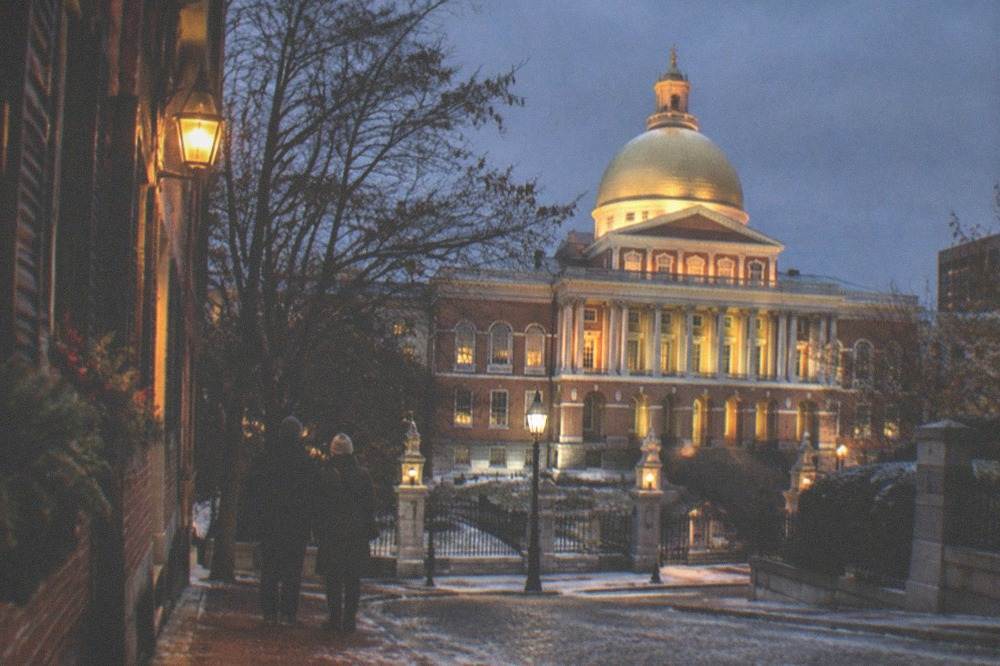
The meeting-point cluster is the practical takeaway. The Underground Ghost Walk meets at 139 Tremont Street, at the Boston Common Visitors Center across from a Dunkin'. The Night-Time Ghost Walk meets at 58 Tremont Street, outside King's Chapel Burying Ground. The Common And Beacon Hill Route meets at the Boylston Street subway station at the corner of Boylston and Tremont. That puts three tours within a few minutes' walk of one another, which makes an evening plan easy: pick by theme and time rather than by convenience, because the convenience is identical.
The two outliers shape their own experiences. The Death-And-Dying tour meets at 24 Beacon Street, in front of the Massachusetts State House, and works the top of the Common. The Haunted Streets Walk meets at the Robert Gould Shaw and 54th Regiment Memorial on the Common's edge and covers its stated 1.5 miles from there. Nothing on the roster runs to Copp's Hill in the North End as a walking-tour focus, though the trail's own daytime interpretation does, and the trolley tour covers different ground entirely with its own two burying-ground stops.
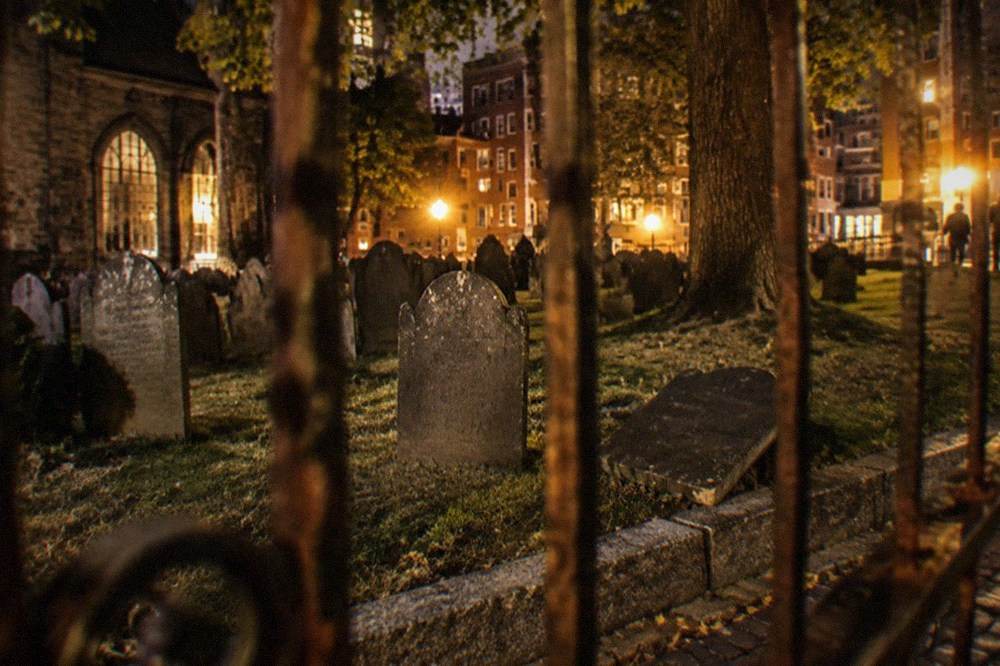
The Night-Time Ghost Walk's 313 reviews make it the most-reviewed walking product on the roster, and its meeting spot is the most atmospheric of the five: you begin standing at the fence of a 1630 graveyard in the dark. If that framing appeals, it is the walk with the deepest graveyard-first structure, and its 4.5 rating and $30 entry price sit in the middle of the pack on value.
Meeting spots being so tightly clustered also means switching tours late costs you almost nothing in logistics. If your first choice sells out on a busy October evening, the backup option usually starts a two-minute walk away.
How Much Does A Freedom Trail Ghost Walk Cost?
Walking ghost tours in Boston run from $22 to $35 per adult. The cheapest is the Common And Beacon Hill Route at $22 for 1.5 hours, the priciest is the Death-And-Dying tour at $35, and the best value by review volume is the Night-Time Ghost Walk at $30 with 313 reviews. Four of the five walking tours carry free cancellation; the Haunted Streets Walk is the one exception.
The full price ladder for the walking format, with what changes as you climb it:
| Price | Tour | What the Extra Money Buys |
|---|---|---|
| From $22 | Common And Beacon Hill Route | The longest route at 1.5 hours, and the only walk centered on Central Burying Ground and Beacon Hill |
| From $26 | 1-Hour Underground Ghost Walk | The shortest and cheapest; a compressed hour covering the core downtown corridor |
| From $30 | 1.5-Hour Night-Time Ghost Walk | The most-reviewed walk on the roster, 313 reviews, meeting at King's Chapel Burying Ground |
| From $34 | 1.5-Mile Haunted Streets Walk | A measured 1.5-mile route with a 5.0 rating from 49 reviews, but no free cancellation |
| From $35 | Death-And-Dying Theme Ghost Walk | The darkest thematic framing: causes of death, funerary customs, and disease history |
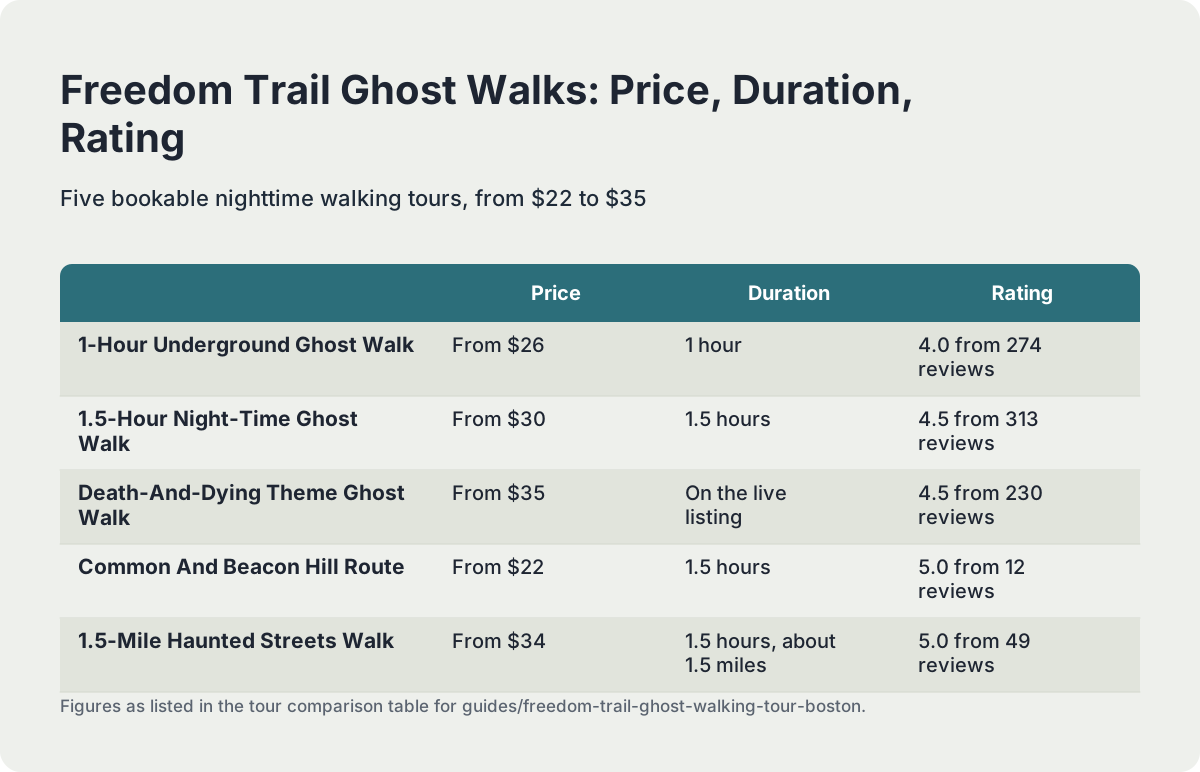
The price band is narrow enough that theme should drive the choice more than budget. Thirteen dollars separate the cheapest walk from the most expensive, less than the price of two beers in the neighborhood you will be walking through. The cancellation policy is the one line worth reading closely: the Haunted Streets Walk's listing does not carry free cancellation, unlike every other product on the roster, so if your travel dates are soft, that is the one to book last or not at all. For everything else, the free-cancellation listings mean you can reserve now and rebook if the forecast turns.
For a fuller cost picture that includes the trolley at $46 and the pub crawls from $29 to $36, the site's ghost tour cost breakdown covers the whole roster, and the best time to take a tour piece handles the seasonal pricing question.
Budget travelers should also remember that the trail itself is free. The paid walk buys you the stories, the guide, and the after-dark structure; the bricks, the graveyards by day, and the North End streets charge nothing.
What Should You Expect After Dark On The Trail?
Expect a guide with a lantern or flashlight, a group of roughly 15 to 25 depending on the night, cemetery fences you look at rather than enter, and stories delivered with varying degrees of theatrical commitment. The burying grounds close around 4 p.m., so night tours view the graves from outside the gates, and the walks run rain or shine unless the operator cancels, which the free-cancellation listings let you escape without cost.
The fence-line point surprises people. Because the city's historic burying grounds close in the late afternoon, a 7 or 8 p.m. ghost walk stops at the iron gates and tells its stories with the stones visible in the dark beyond. Some walkers find this disappointing and others find it better: the yards are unlit, the crowd noise fades, and a guide who knows the material can make a fence line feel like a threshold. If being inside the grounds matters to you, visit during the day, for free, and take the walk at night for the narrative.
Dress for standing more than walking. The walks move, but they stop constantly, and October nights on the Common drop toward the forties. Comfortable shoes, a layer, and a phone you have charged for photos are the standard kit, and the site's what to wear and expect guide goes deeper on season-specific preparation, including what the October crowds do to tour spacing.
When Is The Best Season For A Trail Ghost Walk?
October is peak season, when the Freedom Trail Foundation runs its own lantern tours and every commercial walk adds departures, but it is also the most crowded and expensive month to be in Boston. Late September and early November deliver nearly the same darkness and smaller groups, and winter walks run with fewer people, cheaper hotel rates, and the best odds of a genuinely quiet graveyard stop.
The seasonal logic is simple: these tours need darkness, so summer walks start late and end in twilight, while a 7 p.m. October start is fully dark. Fall also brings the Halloween economy to the whole region. Salem's Haunted Happenings festival drew 1.1 million unique visitors over October in the most recent reported season, and that crowd pressure spills into Boston, where the trolley operator's season extends from late September into early November. Booking a walking tour two or three weeks ahead is wise in October and unnecessary most other months.
The counter-seasonal case is underappreciated. A February ghost walk on the Common passes the Central Burying Ground in actual silence, the group is small, and the stories land differently with cold air and bare trees. The tradeoff is weather risk, which is why the free-cancellation listings matter more in winter: check the forecast the day before, and rebook without penalty if the night turns ugly. The only walk you cannot do that with is the Haunted Streets listing, which carries no free cancellation.
If you are pairing Boston with a Salem day trip during the Halloween rush, the site's Salem pairing guide covers the ferry and train logistics without pretending a Boston-departure haunted day trip is a bookable product, because it is not one on this roster.
That Common And Beacon Hill Route pairing of the trail's free daytime sights with a $22 night walk is about the best value the format offers. The route's small review pool is the one caveat worth repeating: strong reviews, just not many of them yet.
Which Freedom Trail Ghost Walk Should You Book?
For most visitors the 1.5-Hour Night-Time Ghost Walk is the default: 4.5 from 313 reviews, from $30, starting at the fence of the 1630 King's Chapel Burying Ground. Budget and time-constrained walkers should take the 1-Hour Underground Ghost Walk at $26, and anyone who wants the Common's own documented graveyard history should take the Common And Beacon Hill Route at $22.
The three picks below cover the full spread of the walking format: the graveyard-first crowd favorite, the measured 1.5-mile route with the perfect rating, and the compressed budget hour. All three meet on the same corner of the Freedom Trail, so the choice comes down to theme, duration, and price rather than geography.
Whichever you book, the strongest plan pairs it with a free daytime walk of the trail itself. See the stones up close while the gates are open, then let a guide tell you what the fence line hides after dark.
Common Questions About The Freedom Trail Ghost Walk
What Are The 16 Sites On The Freedom Trail?
The Freedom Trail connects 16 sites over 2.5 miles, starting at Boston Common and ending at Bunker Hill and USS Constitution in Charlestown. Named stops include the Massachusetts State House, Park Street Church, Granary Burying Ground, King's Chapel and its burying ground, the Old Corner Bookstore, the Old South Meeting House, and the Old State House. The official directory at thefreedomtrail.org lists all 16 in order.
Where Is Paul Revere Actually Buried?
Paul Revere is buried in Granary Burying Ground on Tremont Street, alongside Samuel Adams, John Hancock, and the five victims of the Boston Massacre. The yard holds an estimated 5,000-plus burials beneath roughly 2,345 surviving markers.
Are The Burying Grounds Free To Enter?
Yes. All four historic burying grounds on the trail, Granary, King's Chapel, Central, and Copp's Hill, are free and open daily, generally from about 9 a.m. to 4 p.m. per the City of Boston's cemetery pages. They close to the public in the late afternoon, which is why night tours view them from outside the gates.
Do The Ghost Walks Go Inside The Cemeteries?
No walking tour on the roster enters the burying grounds, because the city closes them around 4 p.m. and the tours run after dark. The walks stop at the fences and tell the stories from the gate lines. Visit during the day on your own for the interior.
Is The Freedom Trail The Same As A Ghost Tour?
No. The Freedom Trail is a free, self-guided 2.5-mile route with 16 official sites, and its Foundation runs daytime guided tours covering 11 of them. Ghost walks are separate commercial products that use the same corridor after dark with a different script. Doing the trail by day and a ghost walk by night is the strongest pairing.
Which Tour Should You Book If You Only Have One Night?
The 1.5-Hour Night-Time Ghost Walk is the default pick: 4.5 from 313 reviews, from $30, and it starts at the fence of the 1630 King's Chapel Burying Ground. If your budget is tighter or your time shorter, the 1-Hour Underground Ghost Walk at $26 compresses the same corridor into one hour.